
What’s Worth the Investment? The Value of a Good Design Decision
DCI Studio | Timeless Design | Collected Interiors | Investment Pieces
One of the questions I am asked most often is where it makes sense to invest when furnishing a home and where it is perfectly reasonable to spend less. I understand why. Very few projects have unlimited budgets, and even when a client has considerable resources, thoughtful design still requires us to make choices about where those resources will have the greatest impact. But I don't believe spending less should ever mean diminishing quality. Quality is important in every decision we make; it simply doesn't always have a direct relationship to price.
A less expensive object, pillow, footstool or small table can be beautifully made, well proportioned and exactly right for a room. It might also give us an opportunity to introduce something more playful or of-the-moment without making a significant investment in something we may not want to live with for the next twenty years. Conversely, an expensive piece isn't necessarily the right choice simply because of its price. Quality is subjective, and value becomes even more so when we consider how something will be used, what it contributes to the room and how long we expect it to remain there.
That is why I don't think of purchasing with a "save versus splurge" formula. I think about use, longevity, comfort, craftsmanship, scale and how difficult something will be to replace. I also think about emotional value. There are pieces worth investing in because they will work hard every day, and others because they bring something to a room that would be difficult to replicate. The art is knowing the difference.
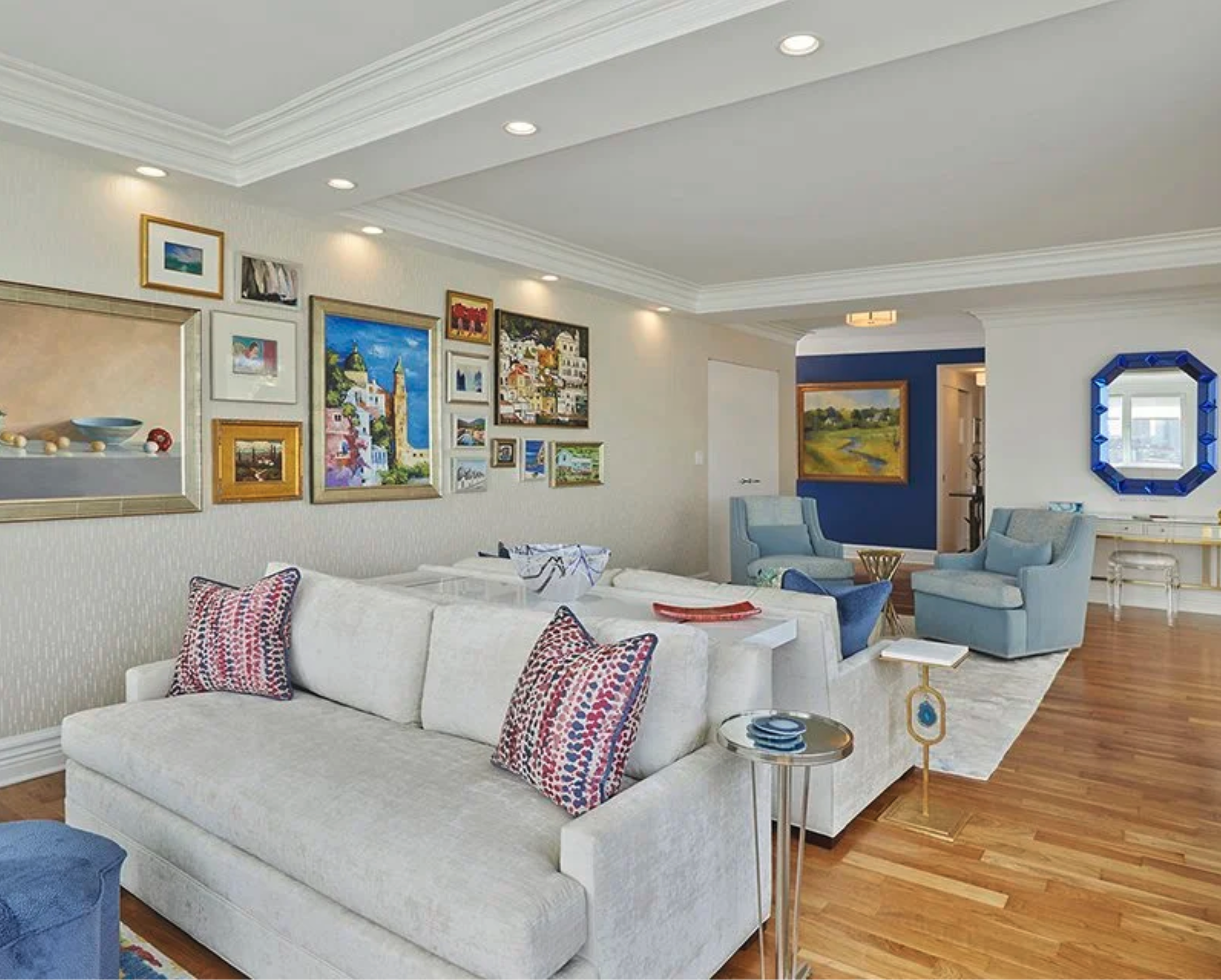
If there is one piece I really don't like to compromise on, it is the main sofa. It is more than just a large piece of furniture in the middle of a room. It is where we have coffee in the morning, catch up at the end of the day, sit with friends and, of course, stretch out to watch a Sunday game. The frame, cushions, seat depth, pitch, fabric and, maybe most importantly, the proportions all matter. A sofa can look beautiful in a photograph, but if it isn't comfortable or doesn't suit the people using it, it isn't a good value at any price.
A well-made sofa also gives us options. It can often be reupholstered rather than replaced when a room evolves, and a quality frame may remain in a home far longer than its original fabric. I would much rather invest there and exercise restraint elsewhere than compromise on a piece that has such an important role to play in the way a room is actually lived in.
Occasional pieces give us much more freedom. Side tables, drink tables, footstools/ottomans and even some cocktail tables can be wonderful places to spend a little less, particularly when we find something with the right scale, material and character. These smaller pieces also give us an opportunity to take a chance. A finish that is currently appealing, an unexpected color or a shape that gives the room a little tension can be introduced without asking it to become a lifetime commitment. An inexpensive piece that is thoughtfully chosen can sit quite happily beside something with significant value. Good design has never required everything in a room to come from the same price category.
Lighting is another area where I frequently encourage investment, particularly when the fixture establishes the architecture or character of a room. A pendant over a dining table or above an island, a beautiful pair of sconces or an important floor lamp can influence how we perceive the entire space. Scale, proportion and the quality of the light itself matter, and a fixture that requires professional installation isn't something I want a client replacing in a few years, because we chose it primarily on price. At the same time, a simple task lamp or decorative bedside lamp may be exactly where a more modest choice makes sense.
Pillows, throws and smaller decorative elements offer another opportunity to be flexible. A well-made pillow cover in an interesting textile can completely change the personality of a chair or sofa without requiring a major investment. I often prefer to invest in good quality down or down alternative inserts and allow the covers to change as the room evolves over time. These are also the layers where we can respond to a color, pattern or an idea that feels current without allowing a trend to dictate the larger and more permanent decisions in the room.
There are other places where I believe the investment is less visible but equally important. Cabinet hardware, plumbing fittings, door hardware and the things we repeatedly touch and operate deserve consideration. We experience their quality physically. A handle that feels substantial, a drawer that operates smoothly or a faucet that functions beautifully may not command attention when someone enters a room, but these details contribute enormously to the experience of living in a home. Saving money on something we will use several times every day only to replace it prematurely rarely represents real savings.
Art, however, is where I am inclined to abandon the idea of save versus splurge altogether. Price has very little to do with whether a work belongs in your home. It might be an important original piece, a photograph by an emerging artist, a vintage textile, something discovered while traveling or a drawing that has been in the family for years. Art should have meaning to the person living with it. Sometimes that will justify a significant investment; sometimes the piece with the least monetary value will become the one you would never consider parting with. However, I would always suggest quality framing to protect the investment and longevity of the artwork.
Perhaps that is the larger point. A successful room isn't defined by how much was spent on it, nor by how cleverly we managed to spend less. It is defined by the quality of the decisions. We invest where comfort, craftsmanship, performance and longevity ask for it, and we spend more modestly where flexibility gives us permission to experiment, respond to something current or simply choose an object because it brings pleasure to the room.
And occasionally, we splurge on something for no practical reason whatsoever except that we cannot imagine the room without it. I think there should always be room in design for that, too. The best buying decisions aren't necessarily the most expensive or the most economical ones. They are the ones that understand what matters, what needs to endure and what deserves simply to surprise and delight us!