
Perfect is out. Personal is in.
DCI Studio | Collected Interiors | Personalized Interior Design | Timeliness Interior Design
Why the most compelling interiors feel collected, layered, and unmistakably belong to their owners.
Historically, perfection was the aspiration in interior design. Rooms were expected to coordinate. Furniture came in matching families. Finishes repeated themselves politely from one space to the next. More recently, social media gave us another version of perfection: the beautifully styled room, photographed at precisely the right angle, where every object seems to know exactly where it belongs. These rooms can be beautiful. They can also leave you strangely unmoved.
What I find much more interesting, and what I am increasingly drawn to, is a home that reveals something about the people who live there. Not all at once, and not because every object has a story attached to it, but because the room has layers. Something old beside something new. A piece of art chosen because someone couldn't stop thinking about it. A chair from another house, another chapter, perhaps even another generation. A material that gets better rather than worse as it ages. The room doesn't simply have a look. It has a life! That, to me, is the difference between a decorated interior and a collected one.
A collected home should never be confused with a cluttered home, nor does it mean filling rooms with antiques or refusing to buy anything new. In fact, creating an interior that feels collected often requires more discipline than creating one in which everything coordinates perfectly. You have to know when something belongs and when it is merely filling space. You have to be willing to wait for the right piece to reveal itself and become comfortable with the idea that everything doesn't need to match in order to work together.
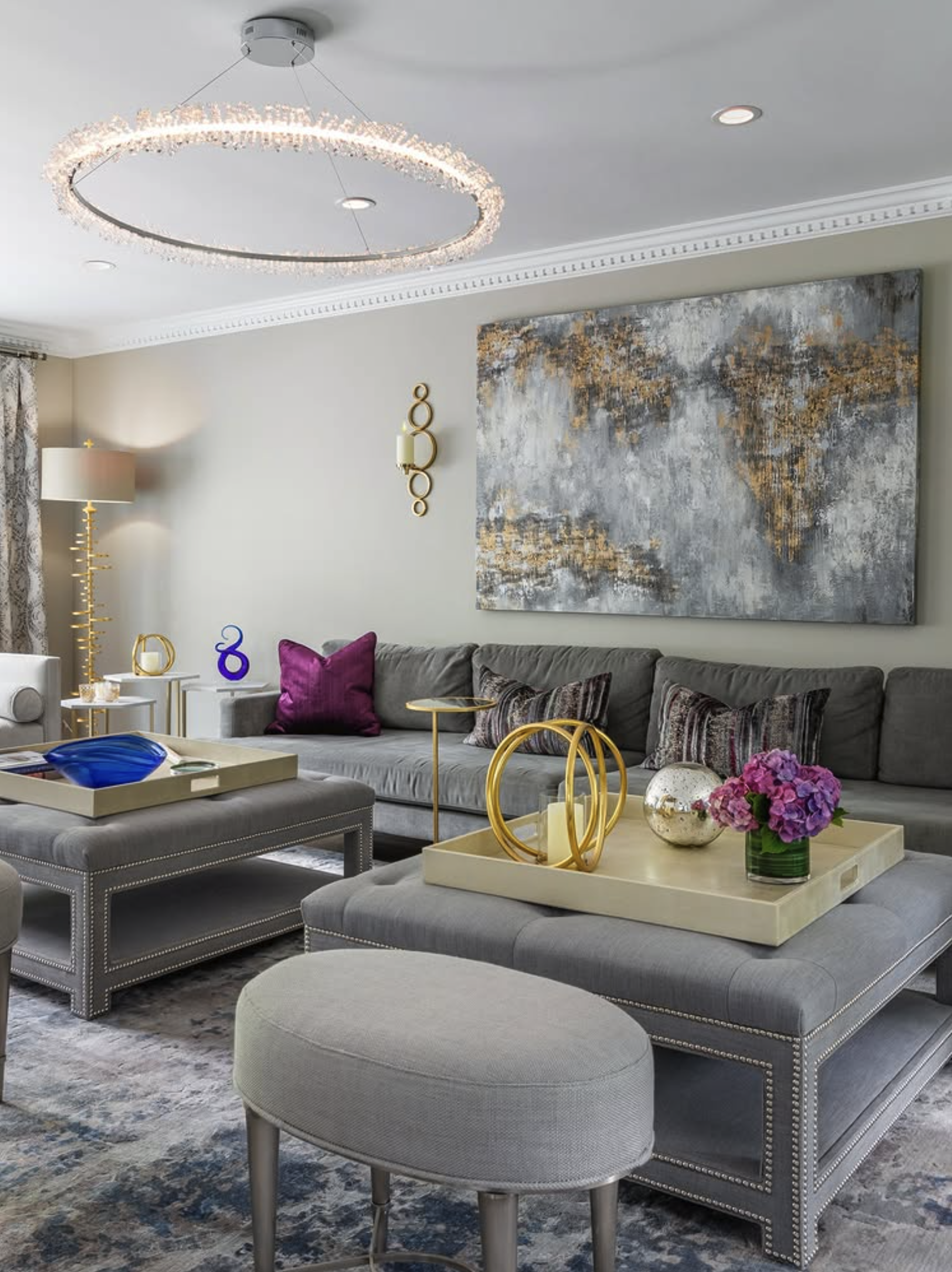
Some of the most memorable rooms I have designed over the years have included elements that, on paper, might not have seemed like obvious companions. A very contemporary work of art above an antique chest. A beautifully tailored sofa paired with a chair that has age and character. Polished surfaces against something worn, tactile, or imperfect. The tension between those things is often what gives the room its energy. When everything comes from the same moment, showroom, or point of view, there is very little for the eye to discover. A collected room unfolds more slowly.
Perhaps that is why these interiors feel particularly appealing right now. We can scroll through hundreds of beautiful rooms before breakfast, identify a paint color, find a similar sofa, save an image, shop the look, and recreate almost anything we see. Yet the more accessible a particular "look" becomes, the less interesting it can begin to feel. What cannot be so easily replicated is individuality.
Your grandmother's small table. The painting you found while traveling. The strange little sculpture you bought years ago without knowing where you would put it. The rug with colors you never would have selected from a tiny sample but somehow love once it is on the floor. The beautifully made new sofa chosen specifically for the way your family lives. These things don't necessarily have anything in common except you. And that is enough.
Of course, this is where good design matters enormously. Personal does not mean arbitrary. A successful room still depends on proportion, scale, balance, rhythm, color, texture, lighting, and all of the decisions that quietly determine whether a space feels right. The goal is to use design to create coherence without erasing personality. There is an art to knowing what needs to relate and what is allowed to stand apart.
I often think one of the most valuable things a designer can bring to a project is permission. Permission to keep the thing you love even though it isn't what you would buy today and to choose the unexpected fabric. Permission not to replace a beautiful piece simply because it has a few marks on it, allowing you to invest in something extraordinary and let other things be quieter. And permission to leave a space unfinished until the right piece appears.
That may be the hardest permission of all because we have become accustomed to the reveal, the moment when a room is suddenly complete. Of course, there are practical reasons to finish a project, but some of the most interesting homes continue to evolve long after installation day. Another painting may arrive, an object may come home from a trip, or a chair may move because suddenly it makes more sense somewhere else. The house changes because life changes.
There is something wonderfully freeing about moving away from perfection. Natural materials patinate. Wood changes. Brass softens. Stone can mark. Fabrics relax. Antiques arrive with evidence that somebody else lived with them before you did. Instead of downgrading a space, these changes can deepen it. Luxury, in my mind, has never been about making everything look untouched. Real luxury is having the confidence to choose things of quality and then actually live with them.
It is a marble countertop that gets used, a beautiful dining table surrounded by people, and upholstery selected not simply because it photographs beautifully, but because you want to sit on it. It is a room sophisticated enough for a wonderful evening and comfortable enough for an ordinary Tuesday. Perhaps that is the larger shift happening in interiors now. We are moving away from homes designed primarily to present an image and toward homes designed to express something.
After more than thirty years in interior design, I have watched tastes change many times. Colors disappear and return. Woods become fashionable, dated, and fashionable again. Minimalism gives way to maximalism and eventually circles back. We rediscover craftsmanship, pattern, ornament, antiques, and all sorts of things we were briefly convinced had gone away forever. That is one reason I have never believed the best rooms should be built around what is “on trend” at a particular moment.
A beautiful home can acknowledge its time and still have staying power. It can feel fresh and embrace new ideas and ways of living, while reflecting the people who commissioned it. Maybe they are collectors. Maybe they entertain constantly. Maybe they adore books. Maybe they inherited beautiful things and don't want to live in a museum. Or maybe they are beginning their collection from scratch. There is no formula for that, and thank goodness.
So yes, I am very happy to see collected interiors having a moment, but I hope we don't turn "collected" into yet another look to reproduce. Don't buy an antique because antiques are back. Don't add pattern because someone announced that minimalism is over. Don't fill bookshelves with objects purchased by the dozen to manufacture a history your home doesn't actually have.
Start instead with what is true. Keep what you love. Invest in what is worth investing in. Mix periods when the conversation between them is interesting. Let beautiful materials age. Choose art because it does something to you. Allow a little tension and leave room for discovery. The best rooms don't need to prove that they are perfectly designed. You simply walk into them and want to stay. After all these years, I still think that is one of the best measures of a beautiful home.